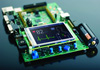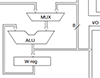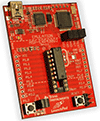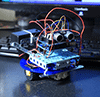





Practical Microcontroller Engineering with ARM Technology
This book covers both the fundamentals, as well as practical techniques in designing and building microcontrollers in industrial and commercial applications.
- Examples included in this book have been compiled, built, and tested
- Includes Both ARM® assembly and C codes
- Direct Register Access (DRA) model and the Software Driver (SD) model programming techniques and discussed
If you are an instructor and adopted this book for your course, please email ieeeproposals@wiley.com to get access to the instructor files for this book.
Why Read This Book
You should read this book if you want a practical, example-driven introduction to building real-world microcontroller firmware on ARM platforms — you will learn both ARM assembly and C techniques and see working code that has been compiled and tested. The book emphasizes hands-on engineering practices, showing low-level Direct Register Access (DRA) and higher-level Software Driver (SD) models so you can choose the right trade-offs for industrial and commercial designs.
Who Will Benefit
Embedded firmware engineers and advanced students with some C/programming background who need practical, tested ARM-focused examples and guidance for building production microcontroller systems.
Level: Intermediate — Prerequisites: Basic C programming, familiarity with digital logic and microcontroller concepts (GPIO, timers, interrupts), and experience using a basic toolchain or IDE for building and flashing firmware.
Key Takeaways
- Implement low-level peripheral control using Direct Register Access (DRA) on ARM microcontrollers.
- Write and read ARM assembly and integrate it with C for performance-critical routines.
- Design and build software drivers using the Software Driver (SD) model for maintainability and portability.
- Debug, compile, and test embedded firmware using common toolchains and hardware debuggers.
- Apply interrupt handling, timer, serial, and ADC/DAC peripheral programming in production-like examples.
Topics Covered
- Introduction to ARM microcontroller engineering and development workflows
- ARM architecture fundamentals and processor modes
- ARM assembly language essentials and integration with C
- C programming patterns for embedded systems on ARM
- Memory map, buses, and startup/boot code
- GPIO, timers, UART, ADC/DAC: peripheral programming with examples
- Serial buses: I2C, SPI and peripheral interfacing
- Interrupts, exceptions, and real-time event handling
- Direct Register Access (DRA) model: patterns and pitfalls
- Software Driver (SD) model: design, layering, and portability
- Low-power techniques and hardware-software co-design
- Testing, debugging, and toolchain workflows (GCC/Keil/IAR, debuggers)
- Bringing it together: case studies and industrial application examples
- Appendices: build scripts, linker scripts, and reference code
Languages, Platforms & Tools
How It Compares
Covers similar hands-on, processor-level topics as Joseph Yiu's ARM Cortex books but emphasizes tested, application-driven examples and the DRA vs SD programming trade-offs; more practical than the theory-heavy ARM System Developer's Guide.