





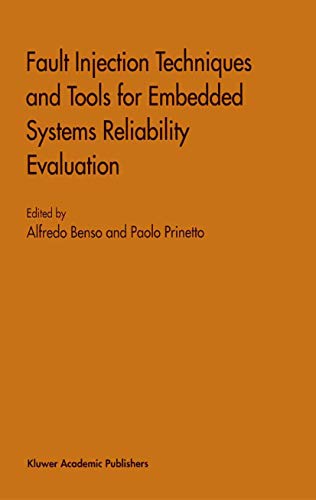
Fault Injection Techniques and Tools for Embedded Systems Reliability Evaluation (Frontiers in Electronic Testing, 23)
This is a comprehensive guide to fault injection techniques used to evaluate the dependability of a digital system. The description and the critical analysis of different fault injection techniques and tools are authored by key scientists in the field of system dependability and fault tolerance.
Why Read This Book
Read this book if you need a practical framework for measuring robustness rather than just designing for it. It is especially valuable for engineers who want to assess fault tolerance, compare injection methods, and learn how reliability evaluation is performed in embedded and safety-critical contexts.
Who Will Benefit
Embedded systems engineers, firmware developers, reliability engineers, and researchers working on fault tolerance, dependability, or safety-critical electronics will benefit most. It is also useful for teams validating microcontroller-based designs, RTOS firmware, or embedded computing platforms where failure analysis matters.
Level: Advanced — Prerequisites: Readers should be comfortable with embedded system architecture, digital logic, and basic reliability or dependability concepts. Familiarity with microcontrollers, firmware development, and hardware-software interaction will make the material much easier to apply.
Key Takeaways
- Understand the purpose and scope of fault injection in embedded reliability evaluation.
- Compare different fault injection approaches, including hardware-, software-, and simulation-based methods.
- Learn how fault injection is used to measure dependability and expose failure modes.
- Evaluate the strengths and limitations of different tools and techniques for testing robustness.
- Gain insight into how faults affect hardware/software interfaces in digital systems.
- Apply fault injection results to improve fault tolerance and system validation practices.
Topics Covered
- Introduction to dependability and fault tolerance
- Reliability evaluation of embedded digital systems
- Fault models and failure mechanisms
- Hardware fault injection techniques
- Software-based fault injection
- Simulation and emulation approaches
- Fault injection tools and test environments
- Experimental methodology and result interpretation
- Comparative analysis of injection techniques
- Case studies in embedded reliability assessment
- Limitations, trade-offs, and practical considerations
- Future directions in fault injection research
Languages, Platforms & Tools
How It Compares
Compared with broader embedded systems or RTOS books, this title is much narrower and more specialized, focusing on reliability assessment rather than design or implementation. It is closer in spirit to dependability and testing references than to mainstream firmware or microcontroller textbooks, making it a better fit for validation and research than for general embedded development.