




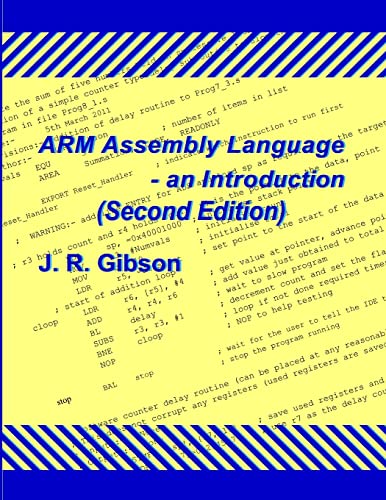
ARM Assembly Language - an Introduction (Second Edition)
The Arm core is the most widely used embedded central processing unit, Cpu, incorporated in programmed electronic devices. Millions of products with one or more Arm cores are sold every day. Arm cores are so widely used that Arm is frequently chosen as the Cpu example for in electronic engineering and other computer courses. This is an introductory text describing the Arm assembly language and its use for simple programming tasks. The text assumes that the reader has never written programs using any assembly language. Features of Arm that differ from those of other common Cpus, especially those used in embedded systems, are emphasised so this provides an introduction to Arm programming for professionals using Arm devices for the first time.
Why Read This Book
You will get a clear, example-driven introduction to ARM assembly and the ARM processor model that grounds higher-level firmware and hardware-software interface work. The book emphasizes features of ARM important to embedded systems (register usage, addressing modes, procedure calls, and exception handling), so you'll gain practical low-level skills useful for debugging, optimization, and bare-metal development.
Who Will Benefit
Best suited for beginners to intermediate embedded engineers or firmware developers who want a practical, architecture-focused introduction to ARM assembly to improve debugging, optimize critical code paths, or understand the hardware/ABI beneath C code.