




Foundations of Analog and Digital Electronic Circuits (The Morgan Kaufmann Series in Computer Architecture and Design)
Unlike books currently on the market, this book attempts to satisfy two goals: combine circuits and electronics into a single, unified treatment, and establish a strong connection with the contemporary world of digital systems. It will introduce a new way of looking not only at the treatment of circuits, but also at the treatment of introductory coursework in engineering in general.
Using the concept of ''abstraction,'' the book attempts to form a bridge between the world of physics and the world of large computer systems. In particular, it attempts to unify electrical engineering and computer science as the art of creating and exploiting successive abstractions to manage the complexity of building useful electrical systems. Computer systems are simply one type of electrical systems.
+Balances circuits theory with practical digital electronics applications.
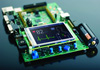
+Illustrates concepts with real devices.
+Supports the popular circuits and electronics course on the MIT OpenCourse Ware from which professionals worldwide study this new approach.
+Written by two educators well known for their innovative teaching and research and their collaboration with industry.
+Focuses on contemporary MOS technology.
Why Read This Book
You should read this book if you want a concise, concept-driven bridge between device physics and system-level digital design: it teaches you to think in terms of abstractions so you can relate transistor behavior to gates, amplifiers, and real interfaces. The presentation is classroom-polished and especially useful when you need intuition that connects analog signal behavior to digital systems used in embedded designs.
Who Will Benefit
Upper-level undergraduates, firmware/hardware engineers, and embedded systems designers who need a solid, conceptual grounding in both analog and digital circuits to design and debug hardware/software interfaces.
Level: Intermediate — Prerequisites: Basic calculus and circuit concepts (Ohm's law, Kirchhoff's laws), introductory physics/electronics such as resistors, capacitors and simple DC circuit analysis.
Key Takeaways
- Analyze circuits using abstraction layers to move between device-level models and system-level behavior.
- Model and predict diode, BJT, and MOSFET behavior for both DC and small-signal conditions.
- Design and evaluate basic analog building blocks such as amplifiers, filters, and op-amp circuits.
- Explain CMOS logic operation, static and dynamic power, and timing fundamentals relevant to digital gates.
- Design and troubleshoot simple sensor signal-conditioning and ADC/DAC interfacing to microcontrollers.
- Assess nonidealities (bandwidth, noise, loading) and their impact on mixed-signal embedded systems.
Topics Covered
- 1. Abstraction and the role of circuits in computing
- 2. Basic circuit elements and DC circuit analysis
- 3. Capacitors, inductors and transient response
- 4. Diodes and semiconductor junctions
- 5. Bipolar and MOS device fundamentals
- 6. Small-signal models and linearization
- 7. Operational amplifiers and feedback
- 8. Filters, frequency response and stability
- 9. CMOS logic gates and static power
- 10. Combinational and sequential digital circuits; timing
- 11. Signal conditioning, sampling, and A/D-D/A concepts
- 12. Noise, nonidealities, and practical interfacing
Languages, Platforms & Tools
How It Compares
Covers similar introductory ground to Sedra & Smith (Microelectronic Circuits) but emphasizes unifying abstraction across analog and digital domains; more structured and course-friendly than The Art of Electronics, which is more practical and lab-oriented.