FPGA Prototyping by Verilog Examples: Xilinx Spartan-3 Version
FPGA Prototyping Using Verilog Examples will provide you with a hands-on introduction to Verilog synthesis and FPGA programming through a "learn by doing" approach. By following the clear, easy-to-understand templates for code development and the numerous practical examples, you can quickly develop and simulate a sophisticated digital circuit, realize it on a prototyping device, and verify the operation of its physical implementation. This introductory text that will provide you with a solid foundation, instill confidence with rigorous examples for complex systems and prepare you for future development tasks.
Why Read This Book
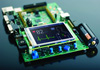
You should read this book if you want a pragmatic, example-driven path from Verilog code to a working design on a Xilinx Spartan-3 board. You will follow clear templates and numerous lab-style examples that teach simulation, synthesis, place-and-route, and real I/O interfacing so you can get an FPGA-based embedded system running quickly.
Who Will Benefit
Students and embedded engineers with basic digital-design knowledge who need practical skills to implement and prototype digital peripherals, controllers, and small systems on Spartan-3 FPGAs.
Level: Intermediate — Prerequisites: Basic digital logic (combinational and sequential circuits) and familiarity with programming concepts; no prior Verilog required but helpful.
Key Takeaways
- Write synthesizable Verilog for common combinational and sequential circuits and test them with testbenches.
- Simulate designs, synthesize to a Xilinx Spartan-3, and generate bitstreams using Xilinx ISE tool flow.
- Implement typical embedded peripherals (UART, VGA, PS/2, memory interfaces) and integrate them into a system.
- Design finite state machines and datapath/control architectures for compact hardware implementations.
- Use timing constraints, pin assignments, and basic place-and-route techniques to get reliable hardware behavior.
- Prototype a simple processor-like datapath and learn practical debugging techniques on real FPGA boards.
Topics Covered
- Introduction to FPGAs and the Spartan-3 board
- Verilog HDL basics and simulation with testbenches
- Combinational logic examples (decoders, multiplexers, encoders)
- Sequential logic and registers (flip-flops, shift registers, counters)
- Finite state machines and control design
- Arithmetic circuits (adders, multipliers, ALU)
- Memory, ROM, and block RAM usage
- Common peripherals: UART, PS/2, and SPI examples
- Video output: VGA controller and timing
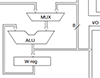
- Processor datapath examples and simple CPU project
- System integration, pin planning, timing constraints, and bitstream generation
- Lab procedures, debugging on board, and appendices on Xilinx tools
Languages, Platforms & Tools
How It Compares
More hands-on and tool-focused than theory-oriented texts like "Digital Design and Computer Architecture" (Harris & Harris); comparable in approach to Pong Chu's VHDL sibling but focused on Verilog and Spartan-3 toolchains.