




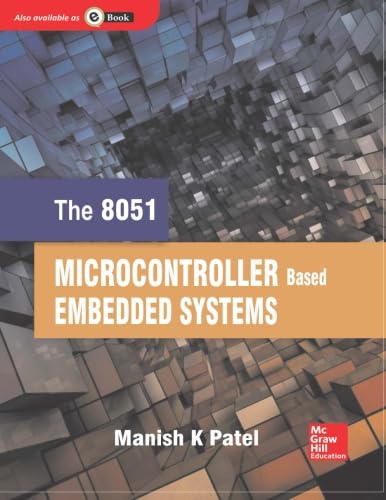
The 8051 Microcontroller Based Embedded Systems
This book introduces fundamental hardware, software and architectural aspects of microcontroller-based embedded systems in an elementary and integrated manner, providing a strong foundation for the development of expertise in designing such systems. The contents of the book are class tested to ensure the treatment is logical and easy to understand for the fresher.
Why Read This Book
You will get a clear, classroom-tested introduction to the 8051 family that walks you from architecture to hands-on interfacing examples and simple projects. The book emphasizes practical firmware tasks—writing assembly and C code, configuring timers/serial/interrupts, and connecting real-world peripherals—so you can build and debug basic 8051-based systems.
Who Will Benefit
Undergraduate EE/EC students, early-career firmware engineers, and hobbyists who need a structured, lab-friendly introduction to 8051-based embedded system design.
Level: Beginner — Prerequisites: Basic digital electronics (logic, binary/hex) and elementary programming familiarity (preferably C); no prior microcontroller experience required.
Key Takeaways
- Describe the internal architecture, memory map, and pin functions of the 8051 family
- Write and debug basic 8051 assembly and C programs for I/O and control tasks
- Configure and use timers/counters, serial (UART) communication, and interrupt handling
- Interface common peripherals such as LCDs, keypads, ADCs/DACs, seven-segment displays, and motors
- Implement simple embedded projects and test them on development boards or simulators
- Apply basic debugging and troubleshooting techniques for firmware and hardware integration
Topics Covered
- Introduction to Microcontrollers and Embedded Systems
- Overview of the 8051 Family and Pin Configuration
- Internal Architecture: Registers, Memory, and Addressing Modes
- 8051 Instruction Set and Assembly Programming
- C Programming for the 8051
- I/O Ports and Bit-Level Manipulation
- Timers and Counters
- Serial Communication (UART) and Baud Rate Generation
- Interrupts and Priority Handling
- Analog Interfacing: ADCs, DACs, and Sensors
- Display and Human Interface: LCDs, Keypads, Seven-segment
- Actuator Interfacing: Motors and Drivers
- Practical Examples and Lab-style Projects
- Appendices: Opcode Tables, Sample Code, Development Tools
Languages, Platforms & Tools
How It Compares
Covers similar beginner-level ground to Mazidi's The 8051 Microcontroller and Embedded Systems but is more classroom/lab oriented and less exhaustive in theory and breadth; more approachable than some encyclopedic 8051 references.