






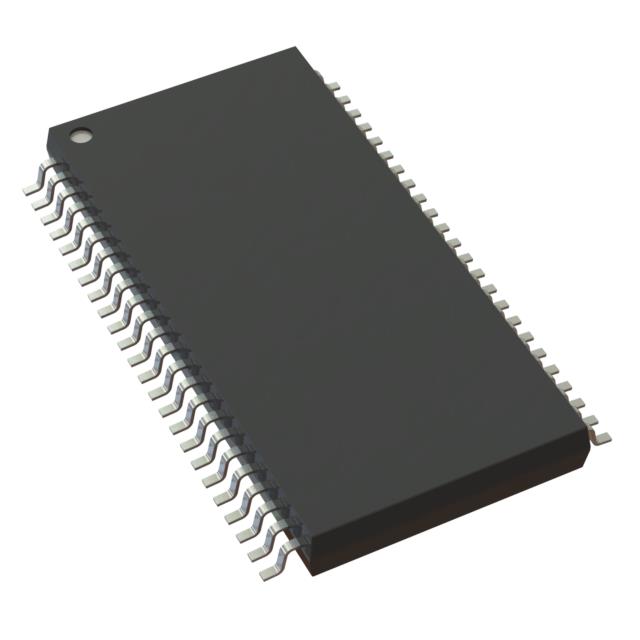
REN9DB803DGILFT
Overview
The 9DB803DGILFT is a high-performance 1:8 differential fanout buffer and zero delay buffer designed specifically for PCI Express Gen1 and Gen2 clocking requirements. It features HCSL-compatible inputs and outputs, operating at frequencies up to 400MHz with support for spread spectrum modulation. The device provides flexible power management through SMBus-controllable individual output enables and undriven differential states in power-down modes.
Why Choose This Part
This buffer offers dual-mode operation as either a zero delay buffer (using a PLL) or a simple fanout buffer, providing flexibility for different system timing architectures. It is highly efficient for its class, consuming 190mA during operation and dropping to only 6uA in sleep mode, while allowing bandwidth programming to optimize jitter performance.
Applications
Key Specifications
Getting Started
Integration requires a stable 3.3V supply and an SMBus host if software-controlled output management is needed. Design efforts should focus on 50-ohm HCSL transmission line impedance and proper termination at the receiver to minimize reflections. Consult the Renesas IBIS models for signal integrity simulation in high-speed PCIe layouts.


