





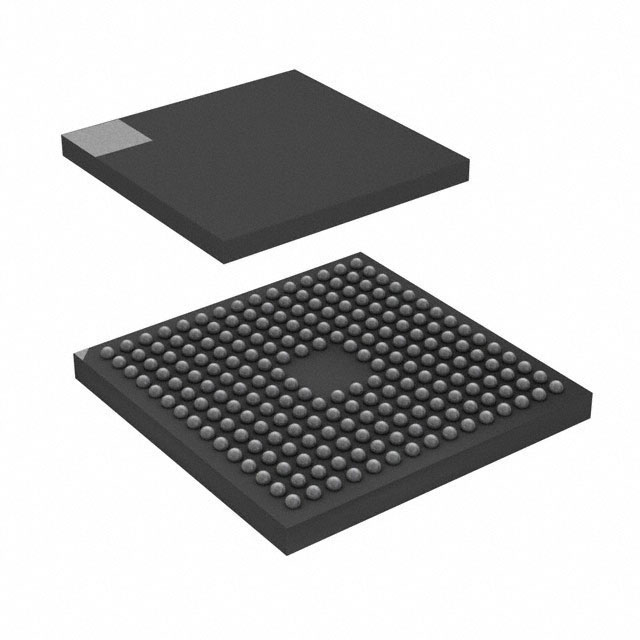
 STM32F469NIH6
Overview
The STM32F469NIH6 is a high-performance microcontroller based on the ARM Cortex-M4 core operating at 180 MHz, designed for applications requiring advanced graphic capabilities and extensive memory. It features 2 MB of Flash and 384 KB of RAM, integrated with a MIPI DSI host controller and Chrom-ART Accelerator to drive sophisticated user interfaces. This device bridges the gap between traditional MCUs and application processors by offering high-speed processing with efficient power consumption.
Why Choose This Part
The inclusion of a MIPI DSI interface and specialized Chrom-ART hardware acceleration enables smartphone-like graphics without the complexity of a full operating system. It offers a massive 2 MB on-chip Flash memory to store complex assets while maintaining low-power modes like Sleep and Standby for battery-operated designs.
Applications
Key Specifications
Getting Started
Start development using the STM32CubeF4 software suite and the STM32CubeIDE for integrated debugging. Hardware evaluation is best performed with the STM32F469I-DISCO Discovery kit, which includes a capacitive touch LCD to test the MIPI DSI and graphic acceleration features out of the box.
Dev Boards
Development boards and breakout modules featuring the STM32F469NIH6 or compatible chips — ready to use for prototyping.


STM32F469 Family
Comparing specs that differ across variants. The current part is highlighted.
| Part Number | I/O Pins | Package | ADC/DAC | Flash | Stock |
|---|---|---|---|---|---|
| STM32F469NIH6 (this part) | 161 | TFBGA-216 | A/D 24x12b; D/A 2x.. | 2MB | 1,261 |
| STM32F469IIT6 | 131 | LQFP-176 | A/D 16x12b; D/A 2x.. | 2MB | 4,123 |
| STM32F469IGT6 | 131 | LQFP-176 | A/D 16x12b; D/A 2x.. | 1MB | 1,762 |
| STM32F469BIT6 | 161 | LQFP-208 | A/D 24x12b; D/A 2x.. | 2MB | 1,252 |
| STM32F469ZIT6 | 106 | LQFP-144 | A/D 20x12b; D/A 2x.. | 2MB | 533 |
Also Consider
STMicroelectronics
- Offers a higher performance Cortex-M7 core and double precision FPU if the Cortex-M4 performance is insufficient.
STMicroelectronics
- A more cost-effective alternative if a MIPI DSI interface is not required but RGB-TFT support is still needed.


