






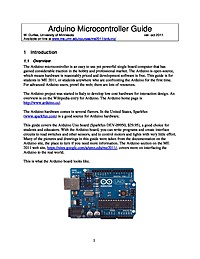
Arduino Microcontroller Guide
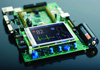
The Arduino microcontroller is an easy to use yet powerful single board computer that has gained considerable traction in the hobby and professional market. The Arduino is open-source, which means hardware is reasonably priced and development software is free. This guide is for students in ME 2011, or students anywhere who are confronting the Arduino for the first time. For advanced Arduino users, prowl the web; there are lots of resources.

Summary
This beginner's guide introduces the Arduino microcontroller platform, covering hardware, development tools, basic firmware, and common peripheral interfaces. Readers will learn how to set up the Arduino IDE, write and upload sketches, and connect sensors and actuators for simple embedded projects.
Key Takeaways
- Understand the core Arduino hardware, board variants, and how to choose the right board for a project
- Set up the Arduino IDE and create, compile, and upload your first sketches
- Interface digital and analog sensors using GPIO, ADC, and PWM and read sensor data reliably
- Use serial, I2C, and SPI communication to connect peripherals and debug embedded applications
- Apply basic power, wiring, and safety considerations for stable prototyping
Who Should Read This
Students, hobbyists, and early-career embedded engineers encountering Arduino for the first time who want a hands-on introduction to microcontroller hardware, firmware, and sensor interfacing.
Still RelevantBeginner
Related Documents
- Consistent Overhead Byte Stuffing TimelessIntermediate
- PID Without a PhD TimelessIntermediate
- Introduction to Embedded Systems - A Cyber-Physical Systems Approach Still RelevantIntermediate
- Can an RTOS be really real-time? TimelessAdvanced
- Memory Mapped I/O in C TimelessIntermediate