






EmbeddedRelated.com
The 2026 Embedded Online Conference
Introduction to Microcontrollers - Buttons and Bouncing

Introduction to Microcontrollers - Buttons and Bouncing

Mike Silva
TimelessBeginner

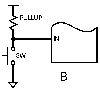
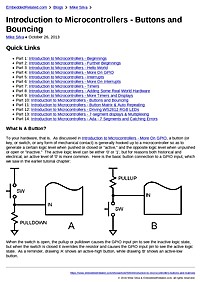
[quicklinks]   What Is A Button? To your hardware, that is.  As discussed in Introduction to Microcontrollers - More On GPIO, a button (or key, or switch, or any form of mechanical contact) is generally hooked up to a microcontroller...



Summary

This blog introduces how mechanical buttons behave when connected to a microcontroller and why contact bouncing creates spurious signals. It covers practical hardware and software debouncing methods and implementation patterns that make button input reliable in embedded firmware.

Key Takeaways

  • Identify how switch wiring, pull-up/pull-down resistors, and contact bounce affect GPIO readings
  • Implement common software debouncing techniques (delay-based, state machine, timer/interrupt-driven)
  • Choose appropriate hardware debouncing options (RC filters, Schmitt inputs, and debouncing ICs) for given constraints
  • Validate button behavior with test strategies and edge-case handling (short press, long press, multiple presses)

Who Should Read This

Embedded firmware and hardware engineers (beginner to intermediate) who need to design or implement reliable button input handling on microcontroller-based systems.

TimelessBeginner

Topics

Firmware DesignSensor InterfacingTesting/DebugBare-Metal Programming

Related Documents


The 2026 Embedded Online Conference