







Choosing a Microcontroller for Your Vehicle
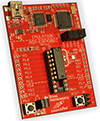
There are many things to take into consideration when choosing a microcontroller or microprocessor for your autonomous vehicle.VoltageSome processors run on 5V and others use 3.3V. Be sure to check the documentation before you buy. ...

Summary
This blog explains the practical considerations when selecting a microcontroller or microprocessor for an autonomous vehicle, covering electrical, performance, and system-level trade-offs. Readers will learn how voltage levels, I/O and peripheral needs, processing power, and firmware/OS choices influence the MCU selection for vehicle applications.
Key Takeaways
- Assess voltage and I/O requirements and confirm MCU operating voltage and level-shifting needs before purchasing.
- Match CPU performance, memory, and peripheral sets to sensing, control, and algorithmic workload (consider ARM Cortex-M vs higher-end application processors).
- Evaluate automotive-grade features such as watchdogs, brown-out detection, extended temperature ranges, and EMI/ESD robustness.
- Plan power and thermal budgets, including regulator topology and low-power modes, to meet vehicle power constraints and battery behavior.
Who Should Read This
Intermediate embedded/firmware engineers or hardware designers building vehicle electronics who need to choose a microcontroller and balance hardware, software, and safety requirements.
Still RelevantIntermediate
Related Documents
- Consistent Overhead Byte Stuffing TimelessIntermediate
- PID Without a PhD TimelessIntermediate
- Introduction to Embedded Systems - A Cyber-Physical Systems Approach Still RelevantIntermediate
- Can an RTOS be really real-time? TimelessAdvanced
- Memory Mapped I/O in C TimelessIntermediate