Making a connection 1
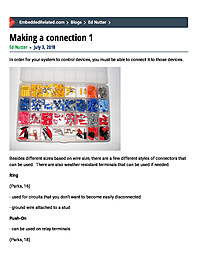
In order for your system to control devices, you must be able to connect it to those devices. Besides different sizes based on wire size, there are a few different styles of connectors that can be used. There are also...

Summary
This blog explains how to choose and use electrical connectors in embedded systems, covering common connector styles, sizing, and practical selection criteria. It helps readers understand mechanical, electrical, and environmental factors that affect wiring, mating, and long-term reliability.
Key Takeaways
- Choose connector types based on current rating, pitch, mating cycles, and environmental sealing requirements.
- Calculate appropriate wire gauge and contact ratings to avoid overheating and voltage drop.
- Provide mechanical strain relief, keyed polarization, and clear pinouts to prevent mis-mating and improve serviceability.
- Include shielding and proper grounding for high-speed or noise-sensitive communication lines.
- Plan for manufacturability and maintenance by considering crimp vs. solder contacts, connector footprints, and cable assemblies.
Who Should Read This
Embedded hardware and firmware engineers, mid-level hardware designers, and system integrators who need practical guidance on selecting and implementing connectors for devices and sensors.
Still RelevantIntermediate
Related Documents
- Consistent Overhead Byte Stuffing TimelessIntermediate
- PID Without a PhD TimelessIntermediate
- Introduction to Embedded Systems - A Cyber-Physical Systems Approach Still RelevantIntermediate
- Design and Implementation of the lwIP Stack Still RelevantAdvanced
- Reed-Solomon Error Correction TimelessAdvanced