Summary
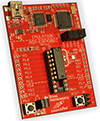
This blog walks readers through setting up, building, flashing, and running NuttX RTOS on three low-cost development boards, highlighting board support and common peripherals. It teaches practical steps for toolchain setup, BSP configuration, flashing methods, and basic debugging so engineers can get NuttX running quickly on inexpensive hardware.
Key Takeaways
- Set up the NuttX build environment and cross-toolchain for ARM Cortex-M targets.
- Build and flash NuttX images to three low-cost development boards and run sample applications.
- Configure board support packages and enable common peripheral drivers (UART, I2C, SPI, GPIO).
- Use serial console and JTAG/SWD debugging workflows to diagnose boot and runtime issues.
Who Should Read This
Embedded firmware engineers, hobbyists, and developers with basic MCU experience who want a hands-on introduction to running NuttX RTOS on inexpensive development boards.
Still RelevantIntermediate
Related Documents
- Consistent Overhead Byte Stuffing TimelessIntermediate
- PID Without a PhD TimelessIntermediate
- Introduction to Embedded Systems - A Cyber-Physical Systems Approach Still RelevantIntermediate
- Can an RTOS be really real-time? TimelessAdvanced
- Memory Mapped I/O in C TimelessIntermediate