






Which MOSFET topology?
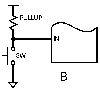
Jason Sachs breaks down the four basic MOSFET topologies for switching a two-wire load, showing why low-side N-channel is usually the simplest and cheapest option. He explains why grounding or chassis return can force a high-side switch, how P-channel devices trade performance for simpler gate drive, and why high-side N-channel options need extra driver circuitry. He also stresses adding freewheeling diodes for inductive loads.
Thermistor signal conditioning: Dos and Don'ts, Tips and Tricks
Jason Sachs shows how to keep thermistor conditioning simple and accurate for embedded systems. He warns against analog linearization and excessive analog stages, and explains why ratiometric dividers, proper ADC buffering, and using the same reference voltage give better results. The post also covers thermal pitfalls like self-heating and lead conduction, plus practical tips for ADC autocalibration and polynomial temperature conversion.
Real-time clocks: Does anybody really know what time it is?
Most RTC chips still expose calendar fields rather than seconds-since-epoch, forcing embedded engineers to write ugly conversion code. Jason Sachs makes the case for offset encoding, subseconds, and an explicit snapshot feature to simplify interval math, raise precision, and avoid rare timing bugs. Read this practical take on RTC trade-offs and a short wishlist for chip makers.
Byte and Switch (Part 2)
Running a thermistor front end from a single AA cell exposes problems you might not expect. Jason Sachs walks through a switchable-gain divider using a P-channel MOSFET and shows how MOSFET off-state leakage and low supply voltages can corrupt high-impedance temperature readings. The post compares bipolar transistors and analog switch ICs as fixes and gives practical component guidance for one-cell designs.
Byte and Switch (Part 1)
Driving a 24V electromagnet from a 3.3V microcontroller looks trivial, but Jason Sachs shows how that simple switch can fail spectacularly. He walks through the cause of MOSFET destruction when an inductive load is turned off, and explains the practical fixes you actually need: a flyback diode, a gate series resistor, and a gate pulldown to keep the transistor well behaved.
Hot Fun in the Silicon: Thermal Testing with Power Semiconductors
Bringing hundreds of amps into the lab for low-Rds(on) MOSFET thermal tests is impractical. Jason Sachs demonstrates a clever workaround using a zener diode, a series resistor, and a constant-current lab supply to dump the same watts into the device at much lower current. He also explains how to use datasheet RθJC values and type T thermocouples to estimate junction temperature and size heatsinking or airflow.
A Useful Current Profiling Method
Dr Cagri Tanriover shares a practical, low-cost way to capture millisecond-scale current profiles when you do not have a DSO. The method uses a 0.3 ohm shunt, an LM324 amplifier with roughly 11x gain, and a microcontroller ADC to log 10-bit samples at 20 kHz, giving sub-millisecond timing and about 1.15 mA sensitivity for embedded radio measurements.
Short Takes (EE Shanty): What shall we do with a zero-ohm resistor?
When you need flexibility on a PCB, zero-ohm resistors are the obvious shortcut, but Jason M. Sachs shows why the label zero is misleading. He compares common SMT jumper specs, high-current specialty parts, and a practical workaround using 1 milliohm resistors to avoid voltage drop. Read this for a quick checklist to pick jumpers that actually carry your board's current.
Make Your Own MCU Boards (2023 Teardown Conference)
Ditch the development boards! Products like the Nucleo development boards serve a wonderful purpose, but they’re ill-suited for projects that need to be small and cheap, such as hobby projects or products just beginning a production run. In this talk (a recording from the 2023 Teardown Conference), you’ll learn how to put a microcontroller or other custom circuit on a PCB a little larger than a stick of gum for less than $3 a board.
Layout recomendations and tips for best performance against EMC
Good PCB layout will prevent many EMC headaches before you even power the board. Maykel Alonso offers a practical checklist covering component and feed analysis, package and PCB choices, placement, routing, and via rules. The post focuses on concrete, low-effort measures like preferring SMD parts, using a 4-layer FR-4 stack with dedicated ground and power planes, and keeping return paths tight to cut emissions and susceptibility.
Turn It On Again: Modeling Power MOSFET Turn-On Dependence on Source Inductance
This is a short article explaining how to analyze part of the behavior of a power MOSFET during turn-on, and how it is influenced by the parasitic inductance at the source terminal. The brief qualitative reason that source inductance is undesirable is that it uses up voltage when current starts increasing during turn-on (remember, V = L dI/dt), voltage that would otherwise be available to turn the transistor on faster. But I want to show a quantitative approximation to understand the impact of additional source inductance, and I want to compare it to the effects of extra inductance at the gate or drain.
A Useful Current Profiling Method
Dr Cagri Tanriover shares a practical, low-cost way to capture millisecond-scale current profiles when you do not have a DSO. The method uses a 0.3 ohm shunt, an LM324 amplifier with roughly 11x gain, and a microcontroller ADC to log 10-bit samples at 20 kHz, giving sub-millisecond timing and about 1.15 mA sensitivity for embedded radio measurements.
Make Your Own MCU Boards (2023 Teardown Conference)
Ditch the development boards! Products like the Nucleo development boards serve a wonderful purpose, but they’re ill-suited for projects that need to be small and cheap, such as hobby projects or products just beginning a production run. In this talk (a recording from the 2023 Teardown Conference), you’ll learn how to put a microcontroller or other custom circuit on a PCB a little larger than a stick of gum for less than $3 a board.
Getting smacked by the long tail of poor design habits
Bad design choices in embedded products have a habit of coming back years later and biting the people who made them. Drawing on decades of consulting and product support, the author reflects on version control, part selection, comments, manuals, and usability choices that seemed harmless at the time but became costly in the field.
Layout recomendations and tips for best performance against EMC
Good PCB layout will prevent many EMC headaches before you even power the board. Maykel Alonso offers a practical checklist covering component and feed analysis, package and PCB choices, placement, routing, and via rules. The post focuses on concrete, low-effort measures like preferring SMD parts, using a 4-layer FR-4 stack with dedicated ground and power planes, and keeping return paths tight to cut emissions and susceptibility.