







Embedded Toolbox: Windows GUI Prototyping Toolkit

In this installment of my "Embedded Toolbox" series, I would like to interest you in the free Windows GUI Toolkit called QWin for prototyping, developing and debugging embedded C or C++ code on Windows.
If you work on devices with non-trivial user interfaces consisting of LCDs (segmented or graphic), buttons, LEDs, etc., QWin could be just the tool for you. It has improved my productivity in such projects dramatically. I personally consider it a gem in my "Embedded...
Linear Feedback Shift Registers for the Uninitiated, Part I: Ex-Pralite Monks and Finite Fields

Later there will be, I hope, some people who will find it to their advantage to decipher all this mess.
— Évariste Galois, May 29, 1832
I was going to call this short series of articles “LFSRs for Dummies”, but thought better of it. What is a linear feedback shift register? If you want the short answer, the Wikipedia article is a decent introduction. But these articles are aimed at those of you who want a little bit deeper mathematical...
Tenderfoot: Recommended Reading

Twenty years ago I read Code Complete by Steve McConnell. And then read it again. And again. And again. Of all the books I have read during my career, I believe this was the book that catapulted me from a young electrical engineer to a young and aspiring embedded software engineer. So to all the ‘tenderfoots’ embarking upon an embedded systems and especially embedded software and firmware career, this entry is for you.
First, I would certainly recommend that all engineers read and read...
Embedded Toolbox: Programmer's Calculator
Like any craftsman, I have accumulated quite a few tools during my embedded software development career. Some of them proved to me more useful than others. And these generally useful tools ended up in my Embedded Toolbox. In this blog, I'd like to share some of my tools with you. Today, I'd like to start with my cross-platform Programmer's Calculator called QCalc.
I'm sure that you already have your favorite calculator online or on your smartphone. But can your calculator accept...
VERY Fast Japanese Sumo Robots

For some reasons, I could not stop watching. I would love to have the maker of one of these robots to blog about the project here on EmbeddedRelated.com, the sensors, microcontroller, algorithms and the challenges... This would make for a very interesting read! Do you know someone?
Ten Little Algorithms, Part 6: Green’s Theorem and Swept-Area Detection
Other articles in this series:
- Part 1: Russian Peasant Multiplication
- Part 2: The Single-Pole Low-Pass Filter
- Part 3: Welford's Method (And Friends)
- Part 4: Topological Sort
- Part 5: Quadratic Extremum Interpolation and Chandrupatla's Method
This article is mainly an excuse to scribble down some cryptic-looking mathematics — Don’t panic! Close your eyes and scroll down if you feel nauseous — and...
Going back to Germany!
A couple of blog posts ago, I wrote that the decision to go to ESC Boston ended up being a great one for many different reasons. I came back from the conference energized and really happy that I went.
These feelings were amplified a few days after my return when I received an email from Rolf Segger, the founder of SEGGER Microcontroller (check out their very new website), asking if I would be interested in visiting their headquarters...
ESC Boston's Videos are Now Up
In my last blog, I told you about my experience at ESC Boston and the few videos that I was planning to produce and publish. Here they are, please have a look and any feedback (positive or negative) is appreciated.
Short HighlightThis is a very short (one minute) montage of some of the footage that I shot at the show & conference. In future shows, I absolutely need to insert clips here and there of engineers saying a few words about the conference (why they...
How to Give Persistent Names To USB-Serial Devices on Ubuntu 14.04

If you have a bunch of USB-serial devices connected to your dock station and you needed to bind your USB-serial devices under static names so that all the USB-serial devices don't get to be assigned to random names by "udev" manager when you re-plug your laptop to the dock station, follow the instructions below. I will share the udev rules I created as a reference and give the step by step instructions to achieve persistent naming. All the steps worked on my Ubuntu 14.04...
Tenderfoot: Introduction to Magic (Numbers that is...)
Once upon a time, while participating in a source code review, I stumbled across the following C code in a header file:
struct Foo { //various structure fields char string_buffer[45+3]; //buffer requires about 45 bytes };My right eyebrow raised, I took a note, and continued with the code review, only to later stumble into this line of code in the body of a C function:
char * temp_string_buffer = (char*) malloc(45+3);Again, I took a note on this function, and continued...
Back from Embedded World 2023
It was great to be back in Nuremberg for Embedded World after three long years. The trade show is probably the most significant event in the embedded systems industry, and it was a relief to see that it has survived the pandemic with more than 900 vendors exhibiting.
I recorded this video on the very first day when the doors opened. What you see in the video is probably 10% or less of the full show floor. I am always impressed by the size of...
Linear Feedback Shift Registers for the Uninitiated, Part XII: Spread-Spectrum Fundamentals
Last time we looked at the use of LFSRs for pseudorandom number generation, or PRNG, and saw two things:
- the use of LFSR state for PRNG has undesirable serial correlation and frequency-domain properties
- the use of single bits of LFSR output has good frequency-domain properties, and its autocorrelation values are so close to zero that they are actually better than a statistically random bit stream
The unusually-good correlation properties...
Using (Apache) NuttX USERLED Subsystem

In the previous article (https://embeddedrelated.com/showarticle/1623.php) we saw how to use GPIOs on NuttX testing on RaspberryPi Pico as example. In that article we used the GPIO output to control an LED, but there is a better way to do that. Of course, NuttX has an LED subsystem similar to Linux LED subsystem: it is called USERLED. Today we will see how to control LEDs using NuttX's USERLED subsystem.
The main advantage of using the USERLED subsystem instead of controlling the LEDs...
Thumb Rules for Effective Meetings

Meetings are unavoidable at any work place. At most occasions, meetings can be frustrating. We all face meeting-nightmares in our professional life.
I worked on a project, where none of the team-members were ever interested in any kind of group discussion or formal communication. At early stages of the project, no one wanted to be a part of decision making process. During middle-stages of the project, no one wanted to share any status updates or discuss any critical issues. And finally when...
Use Microprogramming to Save Resources and Increase Functionality
Introduction
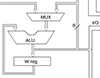
Microprogramming is a design approach that every FPGA designer should have in their bag of tricks. I subscribe to the concept that microprogramming is a structured approach to the design of state machines. This is essentially the view of Maurice Wilkes when he first proposed microprogramming in 1951 as an alternative method for the implementation of the control section of a computer. Wilkes was interested in improving the reliability and reducing time needed to implement...
Tracing code and checking timings

Debugging resource limited systemsApplications writers that write code on large systems have it easy. Well, perhaps not easy, but certainly easier. There are some things that they don't have to worry about and there is a huge array of tools available to them when it comes time to debug. The have choices in their toolsets, lots of choices. They also have a large selection of available methods for getting debugging information out to them such as log files, proc entries, pop up dialog boxes or...
Complexity in Consumer Electronics Considered Harmful
I recently returned from a visit to my grandmother, who lives in an assisted living community, and got to observe both her and my frustration first-hand with a new TV. This was a Vizio flatscreen TV that was fairly easy to set up, and the picture quality was good. But here's what the remote control looks like:
You will note:
- the small lettering (the number buttons are just under 1/4 inch in diameter)
- a typeface chosen for marketing purposes (matching Vizio's "futuristic" corporate...
Optimizing Optoisolators, and Other Stories of Making Do With Less
It’s been a few months since I’ve rolled up my sleeves here and dug into some good old circuit design issues. I started out with circuit design articles, and I’ve missed it.
Today’s topic will be showing you some tricks for how to get more performance out of an optoisolator. These devices — and I’m tempted to be lazy and call them “optos”, but that sounds more like a cereal with Greek yogurt-covered raisins — are essentially just an LED...
Stairway to Thévenin
This article was inspired by a recent post on reddit asking for help on Thévenin and Norton equivalent circuits.
(With apologies to Mr. Thévenin, the rest of the e's that follow will remain unaccented.)
I still remember my introductory circuits class on the subject, roughly as follows:
(NOTE: Do not get scared of what you see in the rest of this section. We're going to point out the traditional approach for teaching linear equivalent circuits first. If you have...
C++ on microcontrollers 4 – input pins, and decoding a rotary switch

This blog series is about the use of C++ for modern microcontrollers. My plan is to show the gradual development of a basic I/O library. I will introduce the object-oriented C++ features that are used step by step, to provide a gentle yet practical introduction into C++ for C programmers. Reader input is very much appreciated, you might even steer me in the direction you find most interesting.
So far I...
Back from ESC Boston
NOT going to ESC Boston would have allowed me to stay home, in my comfort zone.
NOT going to ESC Boston would have saved me from driving in the absolutely horrible & stressful Boston traffic1.
NOT going to ESC Boston would have saved me from having to go through a full search & questioning session at the Canada Customs on my return2.
2017/06/06 update: Videos are now up!So two days...
Crowdfunding Articles?
Many of you have the knowledge and talent to write technical articles that would benefit the EE community. What is missing for most of you though, and very understandably so, is the time and motivation to do it.
But what if you could make some money to compensate for your time spent on writing the article(s)? Would some of you find the motivation and make the time?
I am thinking of implementing a system/mechanism that would allow the EE community to...
Return of the Delta-Sigma Modulators, Part 1: Modulation
About a decade ago, I wrote two articles:
- Modulation Alternatives for the Software Engineer (November 2011)
- Isolated Sigma-Delta Modulators, Rah Rah Rah! (April 2013)
Each of these are about delta-sigma modulation, but they’re short and sweet, and not very in-depth. And the 2013 article was really more about analog-to-digital converters. So we’re going to revisit the subject, this time with a lot more technical depth — in fact, I’ve had to split this...
First Steps in OrCAD 16 [Capture]

Hello community, I know that in last posts I have been writting about the Software. But what about Hardware? In last months I have been dealing with it, exactly with OrCAD 16. And I will explain how to build a PCB in 2 articles. For begginers could be a good and easy guide.
This article explains the part for the designing of the schematic, and in the next one which i will explain the layout part.
The first stuff you must known about OrCAD is that it is not an unique tool for...
Linear Feedback Shift Registers for the Uninitiated, Part III: Multiplicative Inverse, and Blankinship's Algorithm
Last time we talked about basic arithmetic operations in the finite field \( GF(2)[x]/p(x) \) — addition, multiplication, raising to a power, shift-left and shift-right — as well as how to determine whether a polynomial \( p(x) \) is primitive. If a polynomial \( p(x) \) is primitive, it can be used to define an LFSR with coefficients that correspond to the 1 terms in \( p(x) \), that has maximal length of \( 2^N-1 \), covering all bit patterns except the all-zero...
Designing Embedded System with FPGA - 1

With the introduction of soft processors and related tools (like EDK from Xilinx), implementation of basic embedded system in FPGA is made easy. This requires very little or almost no knowledge of VHDL programming. Actually that’s how I started. If user is interested in taking full advantage of FPGA and its parallel processing power, then yes, detail understanding of soft processor, its peripheral bus and VHDL programming is required.
I will start with...
How precise is my measurement?

Some might argue that measurement is a blend of skepticism and faith. While time constraints might make you lean toward faith, some healthy engineering skepticism should bring you back to statistics. This article reviews some practical statistics that can help you satisfy one common question posed by skeptical engineers: “How precise is my measurement?” As we’ll see, by understanding how to answer it, you gain a degree of control over your measurement time.
An accurate, precise...Linear Regression with Evenly-Spaced Abscissae
What a boring title. I wish I could come up with something snazzier. One word I learned today is studentization, which is just the normalization of errors in a curve-fitting exercise by the sample standard deviation (e.g. point \( x_i \) is \( 0.3\hat{\sigma} \) from the best-fit linear curve, so \( \frac{x_i - \hat{x}_i}{\hat{\sigma}} = 0.3 \)) — Studentize me! would have been nice, but I couldn’t work it into the topic for today. Oh well.
I needed a little break from...
Welcoming MANY New Bloggers!
The response to the latest call for bloggers has been amazing and I am very grateful.
In this post I present to you the individuals who, so far (I am still receiving applications at an impressive rate and will update this page as more bloggers are added), have been given access to the blogging interface. I am very pleased with the positive response and I think the near future will see the publication of many great articles, given the quality of the...
SEGGER's 25th Anniversary Video
Chances are you will find this video more interesting to watch if you take five minutes to first read the story of the week I spent at SEGGER's headquarters at the end of June.
The video is only a little more than 2 minutes long. If you decide to watch it, make sure to go full screen and I would really love to read your thoughts about it in the comments down bellow. Do you think a video like this succeeds in making the viewer want to learn more about the company?...